

10 Best Metaverse Crypto Projects To Watch Out For in 2023
Everyone has very little or no knowledge about the Metaverse. What does it mean and how does it work? We might not...

Build AI systems that can understand images, video and visual information. We develop computer vision solutions for object detection, image classification, visual inspection, document processing, video analytics and other applications where machines need to interpret the physical or digital world.






Computer vision allows software to interpret visual information and extract data that would otherwise require manual inspection. We build systems that identify objects, classify images, detect anomalies, understand documents and analyze video based on defined business requirements.
The focus is not simply recognizing what appears in an image. We connect visual intelligence with applications, workflows and business systems so the resulting information can be acted upon.
16+
Years of Exp.
1200+
Successful Projects
34+
Countries Served
200+
Experts
Design visual-processing systems around your data sources, model requirements, applications and deployment environment.
Classify images into defined categories based on visual characteristics and trained model patterns.
Identify and locate specific objects within images and video frames.
Separate relevant objects, regions or areas within visual data for more detailed analysis.
Develop systems that recognize defined objects, patterns, features or visual characteristics.
Analyze video streams to identify objects, events, activities and other relevant visual patterns.
Extract printed or handwritten text from supported images and documents for downstream processing.
Analyze structured and unstructured documents to extract visual and textual information.
Detect defined defects, inconsistencies and quality issues within manufacturing and operational environments.
Develop defined facial analysis and recognition capabilities for appropriate business applications with privacy and access controls.
Improve, transform and prepare visual data for downstream computer vision models and workflows
Develop optimized inference pipelines for applications that require visual analysis with low response latency.
Extract information from invoices, forms, applications and other documents using OCR and visual understanding.
Identify defined product defects, inconsistencies and visual quality issues during manufacturing processes.
Detect and classify relevant objects across images, camera feeds and video content.
Process video data to identify predefined objects, events and patterns across large volumes of footage.
Analyze product shelves, visual merchandising, inventory conditions and other defined retail use cases.
Develop image-analysis systems that identify visual patterns within defined healthcare workflows, subject to appropriate clinical validation and controls.
Analyze identity documents and visual information to support verification and data extraction workflows.
Allow users to find products, objects or visually similar content using images as the search input.
A production computer vision system needs more than an image-recognition model. It must handle image or video ingestion, preprocessing, model inference, results interpretation and integration with the application or workflow that uses those results.
Images, video streams, cameras, documents and visual datasets.
Image resizing, normalization, enhancement, frame extraction and other preprocessing.
Classification, detection, segmentation, recognition and other computer vision models.
Real-time or batch processing of visual inputs.
Object labels, locations, extracted information, confidence scores and defined business rules.
Dashboards, workflows, alerts, APIs and business applications.

Computer vision performance depends heavily on training data, image quality, model design and the conditions in which the system operates. We evaluate models against representative datasets and real-world scenarios to understand where performance is strong and where additional training or refinement is required.
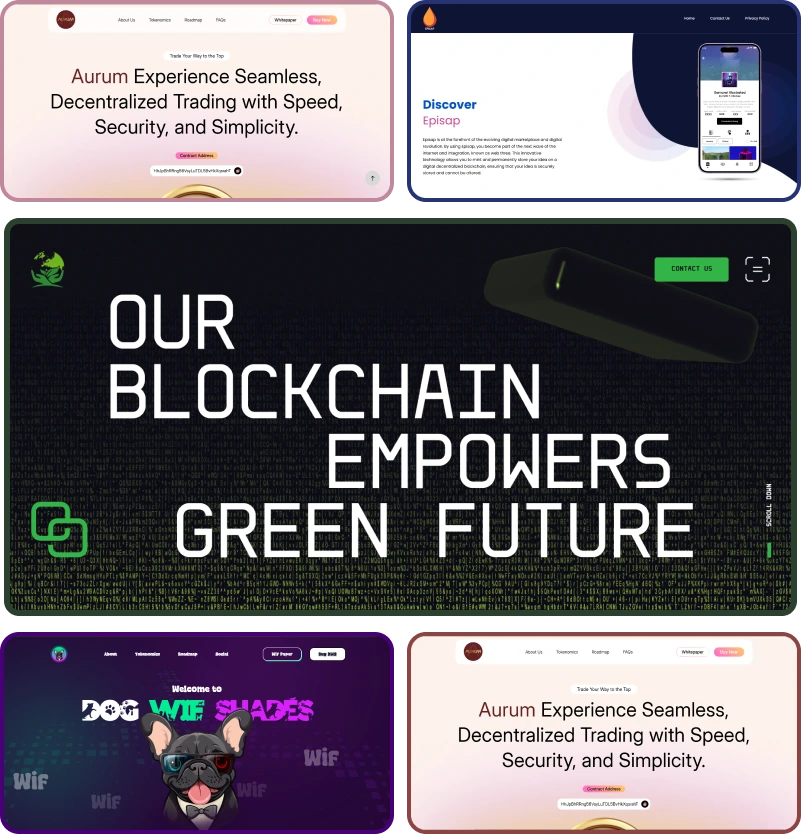
Understand what the system needs to see, identify and deliver as a business outcome.
Review available images, videos, camera feeds, documents, data quality and labeling requirements.
Assess whether computer vision is suitable and determine the appropriate processing and model approach.
Clean, label, structure and prepare representative datasets for training and validation.
Select or develop appropriate computer vision models based on the use case.
Train models and optimize their performance for the expected operating environment.
Evaluate the model using representative images, video and real-world scenarios.
Connect visual intelligence with APIs, applications, dashboards and business workflows.
Deploy the vision system and monitor model behavior, data quality and operational performance.

Process large volumes of images and video without relying entirely on manual inspection.
Extract useful information from documents, images and visual data more efficiently.
Apply defined visual inspection criteria consistently across supported operational processes.
Convert visual data into structured information that can feed dashboards, workflows and business decisions.
Explore selected computer vision projects covering image analysis, document processing, visual inspection, object detection and video intelligence.
Practical insights on computer vision models, image processing, object detection, segmentation, OCR, video analytics, model optimization and production deployment.
Everyone has very little or no knowledge about the Metaverse. What does it mean and how does it work? We might not...
Today, smart contracts are beneficial for companies. This in-depth guide goes into great detail about their unique...
Everyone must be aware of how important it is to have a website in order to make a mark in the IT business industry...
Welcome to the next gaming frontier, where virtual worlds collide with reality to create immersive experiences like...
DeFi is an innovative system that will fundamentally change global finance. In summary, DeFi is an open monetary sy...
Everyone has very little or no knowledge about the Metaverse. What does it mean and how does it work? We might not...
Today, smart contracts are beneficial for companies. This in-depth guide goes into great detail about their unique...
Everyone must be aware of how important it is to have a website in order to make a mark in the IT business industry...
Welcome to the next gaming frontier, where virtual worlds collide with reality to create immersive experiences like...
DeFi is an innovative system that will fundamentally change global finance. In summary, DeFi is an open monetary sy...
Where connections are brewed, ideas percolate, and inspiration flows!
Let’s hear about your project. Drop us the details or send us a direct email
 24/7 Support